
User-Generated Content in Digital Marketing: Why It Matters More Than Ever
What if your customers became your most powerful marketing team—sharing stories, showcasing your products, and building buzz without any paid promotion? That’s the power of User-Generated Content (UGC). In today’s digital landscape, UGC is more than just a trend—it’s an essential strategy for building trust, driving authentic engagement, and expanding your brand’s reach. This post explores the psychology behind why UGC works, highlights real-world brand examples, and offers insights into how digital marketers can harness it effectively. Whether you’re refining your content strategy or just discovering the power of customer advocacy, this guide will show you why UGC deserves a spot in every digital marketing plan.
What is User-Generated Content (UGC)
User-Generated Content (UGC) is any content like photos, videos, reviews, or social media posts created by regular people rather than a brand or business. It’s when customers, fans, or users share their genuine experiences or opinions about a product, service, or brand. For example, someone posting a picture of their new sneakers on Instagram or writing a review about a restaurant online is creating UGC. It’s valuable because it feels authentic, builds trust, and often influences others to try the product or service themselves.
Why Does UGC Work? (The Science Behind Its Effectiveness)
Before jumping into how to use UGC, it’s important to understand why it works so well. The secret lies in human psychology—people trust other people, especially when their stories feel real and relatable. Unlike traditional marketing, which often feels polished and sales-driven, UGC taps into authenticity, emotion, and social influence. Let’s explore the key reasons why user-generated content has become one of the most effective tools in digital marketing today.
- Trust and Authenticity: People trust other people more than they trust brands. According to research, 92% of consumers trust recommendations from individuals (even strangers) over branded content. UGC feels more real because it comes from people who aren’t paid to promote.
- Social Proof: When customers see others using and enjoying a product, it builds confidence that they’ll also have a good experience. Psychologically, this taps into herd behavior we tend to trust and follow the actions of others.
- Emotional Connection: UGC often feels personal. Seeing someone’s genuine excitement or satisfaction with a product is more relatable than a polished ad.
- Cost-Effectiveness: Brands don’t have to spend big budgets on producing content when they leverage UGC. It’s a cost-efficient way to create a steady stream of content.
- Engagement Boost: UGC tends to generate more likes, shares, and comments because it’s more relatable and less “sales-y.” Studies have shown that UGC-based ads can result in a 4x higher click-through rate.
Challenges of UGC
- Lack of Control: Brands can’t always control what users post. A bad review or low-quality image can sometimes harm the brand’s image.
- Quality and Consistency: Not all user-generated content will align with the brand’s aesthetic or message.
- Moderation: UGC requires active monitoring to ensure that only appropriate and relevant content is associated with the brand.
User-Generated Content (UGC) Case Studies: Real-World Success Stories
GoPro – Awards
- What They Did: GoPro encouraged users to upload their videos shot on GoPro cameras.
- Impact: The brand became synonymous with adventure and authenticity. Their user videos generated millions of views, fostering a loyal community.
- Takeaway: By showcasing UGC, GoPro turned its customers into brand ambassadors.
Starbucks – #RedCupContest
- What They Did: Starbucks invited customers to share photos of their holiday-themed red cups.
- Impact: The campaign saw over 40,000 submissions in just two days, driving immense engagement.
- Takeaway: Simple, user-driven campaigns can create significant buzz and foster community participation.
Coca-Cola – Share a Coke
- What They Did: Coca-Cola personalized bottles with popular names and encouraged customers to share pictures.
- Impact: Sales increased by over 2%, and the campaign generated a massive wave of social media posts.
- Takeaway: UGC thrives when it feels personal and interactive.
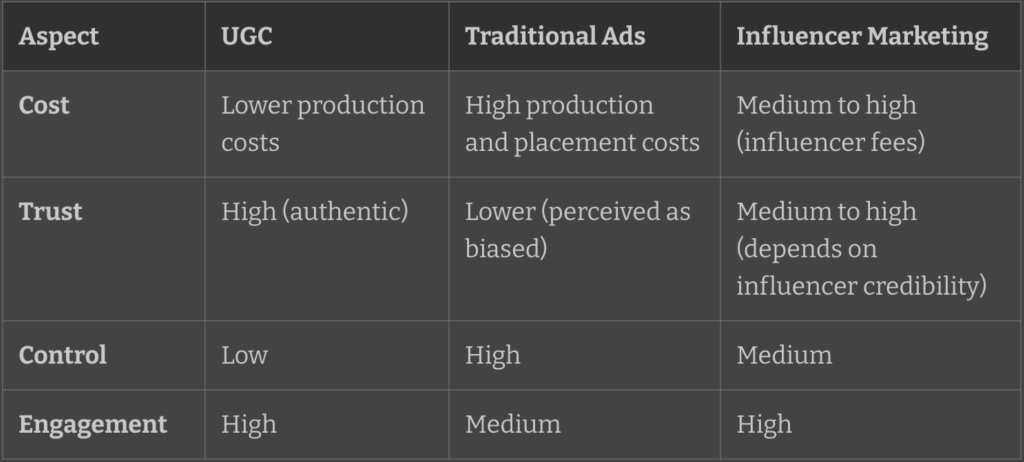
UGC vs. Other Marketing Strategies
The Future of UGC in Marketing Strategies
User-Generated Content (UGC) has a strong future because:
- Continued Emphasis on Authenticity: Consumers increasingly value real, transparent marketing.
- Emergence of New Platforms: Platforms like TikTok thrive on user-generated trends, pushing brands to embrace UGC.
- AI and Moderation Tools: Improved AI tools can help brands monitor and curate UGC more efficiently.
- Hybrid Campaigns: Combining UGC with other strategies, such as influencer marketing, can amplify reach and impact.
Investing in UGC is a wise strategy for most brands, but it should complement, not replace, other forms of content marketing. Its success depends on a brand’s ability to engage and foster an active community of contributors and reach audiences that otherwise would have never heard about you.
No matter how good and big your marketing strategy and budget is. It’s only one piece to the whole marketing puzzle.