


1. Mobile Advertising Vehicles: They Turn Heads—And Stay Top of Mind
A branded vehicle, advertising while cruising through downtown is impossible to ignore. Unlike digital ads—designed to be less intrusive, avoid disrupting a user’s online experience, and often disappearing in a second—these rolling billboards command attention in the real world. People stop. They take photos. They share them on social media, leaving a positive sentiment and a feeling of excitement with every onlooker.
This kind of visibility creates instant brand recognition. It’s experiential. It’s shareable. And it sticks in a consumer’s mind far longer than a sponsored ad.
2. Rolling Billboards: Humanizing Your Brand
Digital marketing often feels transactional—likes, clicks, conversions. Mobile marketing vehicles flip the script by creating a physical presence. They allow you to meet customers where they are: at festivals, outside sporting events, and in busy city centers. These vehicles become characters—mascots you get to meet in person. Think about it: when the Google Maps car drives by, people point and stare. And that isn’t even a mobile advertising vehicle, though it behaves like one.
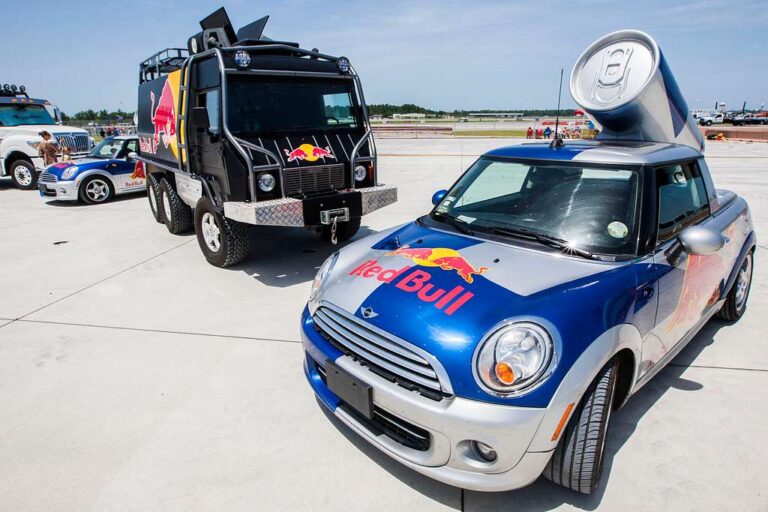
When Red Bull hands you a cold drink from their car, or the Wienermobile pulls up to a community fair, it’s no longer just marketing—it’s a memory. That direct interaction builds emotional connections and brand loyalty in ways algorithms can’t replicate.

3. Branded Vehicles: They Create Social Media Buzz (Ironically)
Here’s the twist: even though this strategy feels “traditional,” it thrives in the digital ecosystem. Why? People love sharing the unexpected. It gives them a reason to post and show others what they’ve seen. Spotting an L.L.Bean Bootmobile on the highway? That’s an Instagram Story. A selfie with the Wienermobile? Straight to TikTok.
The value? You didn’t even ask—and yet it’s there. You can’t get any better.
Mobile marketing vehicles are content machines in disguise. They drive organic reach and user-generated content—something even the best-paid ads struggle to achieve authentically. It’s like having an in-house influencer working for your brand, but without the headaches. For marketing executives—CMOs and even CEOs—this is an asset, not a liability. You may also like User-Generated Content (UGC) | Case Study: The Basics.
4. Vehicle Marketing— Stand Out From the Digital Marketing Clutter
Today’s consumers are bombarded with outbound marketing, encountering thousands of ads daily. Most blend into the background noise—or worse, get ignored entirely. Facebook’s own testing revealed that right-hand column ads are significantly less effective at attracting and retaining user attention compared to ads placed in the News Feed.
Vehicle marketing, a form of out-of-home advertising, offers something rare: scarcity. These rolling “brand characters” are novel, experiential, and unforgettable. It’s always something special. I mean, how long has the Goodyear Blimp been around? Case in point.
When your brand shows up in a larger-than-life way on the streets, it doesn’t compete for attention—it owns it.
Out-of-Home Advertising That Moves: A Winning Strategy
In the digital age, attention is currency. Mobile advertising and marketing vehicles cut through crowded feeds and ad blockers by being memorable in real life. People don’t avoid them—they chase them. These are versatile tools for:
- Launching new products (imagine a giant version of your product driving around town)
- Community engagement (partner with local events for presence and goodwill)
- Cross-channel campaigns (bridge offline experiences with online amplification)
When done right, they make your brand feel bold, accessible, and unforgettable.
Mobile Marketing Vehicles: The Road Ahead
While digital marketing isn’t going anywhere, the brands winning hearts are those willing to blend online and offline experiences. Mobile advertising and marketing vehicles aren’t just nostalgic novelties—they’re smart, disruptive tools for showing up to your audience in ways your competitors won’t.
These are brand assets playing the long game, with short-term—and sometimes immediate—impact. Your team, your partners, and even your customers get excited, eager to meet the vehicle and share the experience with everyone they know.
But don’t think that simply slapping graphics on a van will deliver the same results. This is a form of art—a creative marketing approach designed to bring your brand to life.
So… is your brand ready to hit the road? Let’s chat we have the means. Contact Us