
Why E-Commerce Brands Can’t Rely Only on Organic Visibility

E-Commerce Advertising: Pay-to-Play Ecosystems
In today’s internet of e-commerce worlds, organic reach alone isn’t enough. While SEO and content marketing are important, they represent only one piece of a comprehensive digital marketing strategy. Platforms like Amazon, META, X, TikTok, and Google operate in pay-to-play ecosystems. They are advertising networks that build the infrastructure in exchange for showing you an advertisement. For brands, that means the more you invest in ads, the more visibility you get. It’s in their best interest. In e-commerce, paid advertising is not optional—it is the fast lane to reaching new customers.
While organic posts help build brand trust, they rarely get the same reach or speed as ads. If your goal is sales growth, ad spend is the lever that moves the needle. Read more about it in our article “Should You Invest in SEO or Paid Search for Your Online Store? A Side-by-Side Breakdown.”
Why Ads Outpace Organic in E-Commerce
When shoppers are searching for products, the first listings they see are almost always paid placements. That immediate visibility matters because:
- High intent buyers click first: Shoppers ready to purchase usually act on the first options they see.
- Ad placement dominates results: Sponsored products appear above organic listings, just like eye-level shelf space in a store.
- Faster feedback loop: Ads let you test messaging, pricing, and offers in real time, while SEO takes months to gain traction.
What Is Advertising Placement?
In e-commerce, placement is where your product or ad appears on a search page or marketplace. A strong ad position is critical for visibility, and in competitive spaces, it’s nearly impossible to secure top spots without paying for them.
Here’s what placement looks like:
- Sponsored products: Featured at the very top of Amazon or Google Shopping, above organic results.
- Social media ads: Inserted into feeds before users see organic posts, ensuring they’re the first thing users interact with.
- Homepage or carousel spots: Premium positions that brands compete for; often include larger visuals and interactive elements.
- Organic listings: Appear further down the page, receiving less visibility unless boosted by traffic, clicks, and engagement.
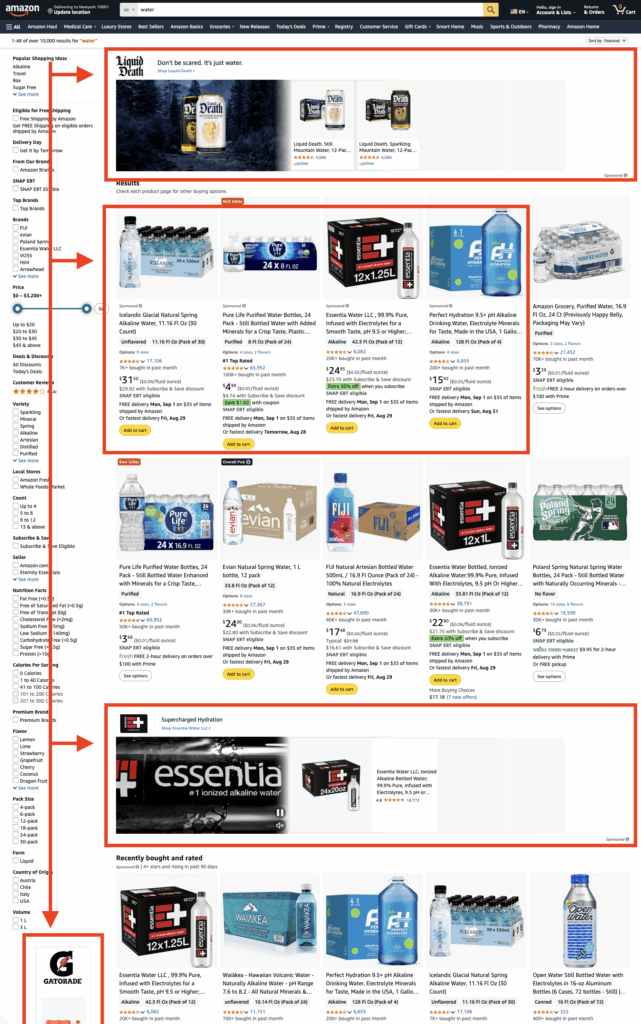
E-commerce Paid Ads: Sponsored (Image)
The red boxes highlight different ad placements on an Amazon search results page. Notice how sponsored brands appear at the very top, following by sponsored products which appear like all other listings, pushing organic listings further down. Mid-page, carousel placements showcase branded product lines in scrollable formats. On the sidebar and lower sections, additional placements such as Demand-Side Platform (DSP) keep brands visible throughout the shopper’s browsing journey and interests. This structure ensures that ads dominate the path to purchase, giving brands multiple chances to capture attention before a buyer clicks.
Why Different Placements Matter
Not all ad placements are equal—location and format play a major role in performance:
- Top-of-page placements: Capture immediate attention and clicks.
- Mid-page carousels: Provide branded storytelling opportunities, often allowing multiple products to be displayed together.
- Video placements: Deliver immersive experiences, letting brands engage with shoppers while they’re actively comparing options.
- Sidebar or display placements: Keep products visible during browsing, influencing consideration at every stage.
Each placement is designed to influence the click—bringing a shopper one step closer to the ultimate conversion: the sale. The higher the search placement, the greater the chance of clicks—and in e-commerce, clicks directly lead to revenue.
Playing the Game of ACoS & ROAS
Paid ads experts—often called specialists—have a common saying: “if you don’t advertise, someone else will.” In crowded markets, visibility isn’t optional; it’s survival. Even the best products can be buried if competitors are willing to outspend you. That’s where the game of ACoS (Advertising Cost of Sales) and ROAS (Return on Ad Spend) comes into play.
- ACoS is your defense: it tells you how efficiently you’re spending compared to sales. A lower ACoS means stronger margins.
- ROAS is your offense: it measures how much return each dollar generates. A higher ROAS means bigger wins on investment.
The trick is knowing how to balance the two. Focus only on lowering ACoS, and you may underinvest—losing ground to competitors who dominate visibility. Push only for high ROAS, and you might overlook long-term awareness campaigns that don’t convert right away but strengthen your brand for future growth.
Smart advertisers don’t just chase numbers; they align them with strategy:
- Short-term: protect profitability.
- Long-term: build market share and awareness.
In other words, the brands that win are those willing to play the paid game strategically. And that’s exactly why going organic-only is a gamble few e-commerce brands can afford—which brings us to the next point: why you can’t rely on organic visibility alone.
Why You Can’t Go Organic-Only
Organic visibility builds long-term credibility and trust, but it’s often slow, unpredictable, and limited—especially on platforms designed to prioritize ad revenue. Social and search algorithms increasingly reward brands that invest in paid placements, making it harder for purely organic efforts to gain consistent traction. For e-commerce businesses, this means organic marketing should complement paid campaigns by reinforcing brand authority, nurturing customer relationships, and driving engagement. Ads, on the other hand, provide the scalability and reach needed to generate sales quickly. When organic and paid strategies work together, brands can build both immediate growth and lasting visibility.
The Power Duo: Paid Ads + Organic Marketing
Success in digital marketing doesn’t come from picking one path—it comes from blending both. Paid campaigns deliver speed and precision, while organic efforts build depth and trust that last.
With paid ads, you gain:
- Instant visibility: traffic flows in as soon as campaigns go live.
- Exact targeting: your message reaches the exact audience you want.
- Agile experimentation: quickly test and refine offers, creatives, and messaging.
With organic marketing, you gain:
- Credibility over time: authority grows as customers repeatedly see and engage with your brand.
- Authentic presence: showing up consistently in ways that feel real, not forced.
- Compounding growth: visibility and engagement stack up, even without constant spend.
When you combine the two, you create momentum: ads spark immediate sales and awareness, while organic sustains the relationship, deepens loyalty, and keeps customers coming back. Together, they form a marketing engine that’s both fast-moving and built to last.
Why Even a Small Ad Budget Matters
Relying only on organic marketing is like fishing without bait—you might catch something eventually, but it’s slow and uncertain. That’s why setting aside at least some budget for ads, even if it means running them only on select days, is essential. A well-timed, focused spend allows your budget to work harder, reach the right people faster, and make every dollar more efficient. Paid campaigns give your strategy the push it needs to break through crowded feeds and search results.
Here’s why investing—at any scale—matters:
- Pay-to-play ecosystems: Visibility increasingly depends on ad budgets, not just strong content.
- Ads deliver speed: They generate faster traffic and conversions compared to SEO alone.
- Placement is power: Prime spots are reserved for brands willing to invest.
- Organic still matters: It builds credibility and trust but cannot carry growth entirely on its own.
- Blending both wins: Paid ads provide the scale and momentum, while organic efforts sustain authority and long-term loyalty.
In today’s landscape, organic visibility is valuable but insufficient on its own. Algorithms are designed to prioritize revenue, meaning brands that don’t invest risk staying invisible. The winning approach is a smart balance—ads to accelerate reach and sales, and organic to nurture the audience and reinforce lasting trust.
Organic Visibility Isn’t Enough
For e-commerce brands, organic visibility alone isn’t enough. Platforms are designed as pay-to-play ecosystems, where ads aren’t just optional—they’re the price of entry for real growth. And it’s no accident. These companies are for-profit, and it’s in their best interest to make ads perform well. By constantly refining algorithms, they make advertising more effective, more precise, and more fair, giving both large and small brands a chance to compete. The catch? They want you to see results so you keep coming back.
Paid ads secure prime placement and deliver speed—traffic, conversions, and visibility you can’t get from organic alone. Organic, on the other hand, builds trust, authority, and long-term loyalty. The winning move isn’t choosing one over the other, but blending both. Just don’t skip ads—they’re the fuel that keeps your brand visible in today’s pay-to-play world.